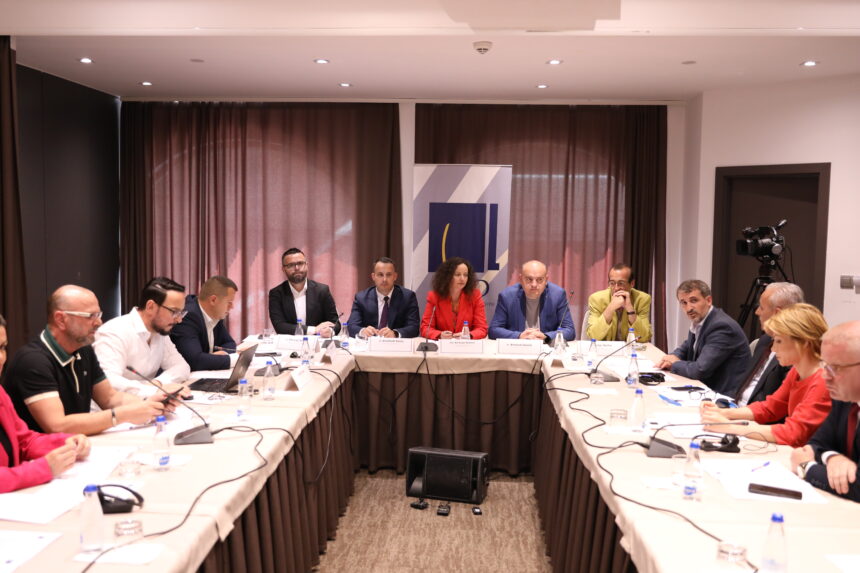
Pristina, June 11, 2025 – The Kosovo Law Institute (KLI) organized a roundtable on the occasion of the publication of the report: “Legal Challenges of LGBTIQ+ Individuals and Journalists in Kosovo.”
The event brought together Burbuqe Brahimi, Senior Political Officer at the Embassy of the Kingdom of the Netherlands; Kreshnik Kaçiu, Judge at the Pristina Basic Court; Armend Hamiti, Prosecutor at the Pristina Basic Prosecution; Xhemajl Rexha, President of the Association of Journalists of Kosovo; Arbër Nuhiu, Director of the Center for Social Group Development; as well as representatives of public institutions and civil society.
During the opening remarks, KLI Executive Director Ehat Miftaraj highlighted the project’s achievements in representing journalists and defending their rights in various cases.
“Within this project, we have represented journalists and, I can say, achieved success in protecting their rights. In several cases, we secured favorable outcomes in court, which has helped improve or uphold their rights,” Miftaraj stated.
Senior Political Officer at the Embassy of the Kingdom of the Netherlands, Burbuqe Brahimi expressed gratitude to KLI for its work in advancing the rights of LGBTIQ+ individuals and journalists through the project.
Judge Kreshnik Kaçiu emphasized the need to strengthen punitive measures in cases affecting marginalized groups and journalists, insisting that perpetrators of crimes be sanctioned to the fullest extent allowed by law.
Prosecutor Armend Hamiti noted that, beyond the legal challenges faced by the LGBTIQ+ community and journalists, there is also a need to raise general awareness about LGBTIQ+ rights and the rights afforded to journalists.
Arbër Nuhiu, Director of the Center for Social Group Development, highlighted that the lack of legal recognition for same-sex marriages automatically infringes on various rights, including inheritance rights. He also noted that individuals from this community are more likely to report incidents to civil society organizations before approaching the police.
Xhemajl Rexha, President of the Association of Journalists of Kosovo, stressed that punishments in cases involving journalists remain lenient.
The report was presented by KLI Senior Researcher Astrit Kolaj, who explained that the study analyzed two court rulings involving LGBTIQ+ victims, finding that institutions of the justice system handled these cases within a reasonable timeframe.
Kolaj further outlined the challenges faced by LGBTIQ+ individuals, including the lack of legal recognition for civil partnerships, property, inheritance, and pension-related issues, as well as difficulties in changing gender and name legally.
Regarding journalists, Kolaj emphasized that punitive measures in cases where journalists are victims remain relatively low.
“With respect to punitive measures, we can conclude that sanctions for attacks and threats against journalists are relatively low,” Kolaj said.
He also noted that, in the absence of clear legal regulations, media outlets face challenges regarding liability for unlawful third-party comments published on their social media platforms.
The publication of this report, highlighting the legal challenges faced by LGBTIQ+ individuals and journalists in Kosovo, was supported by the Embassy of the Kingdom of the Netherlands through the MATRA program.
The report can be accessed here.